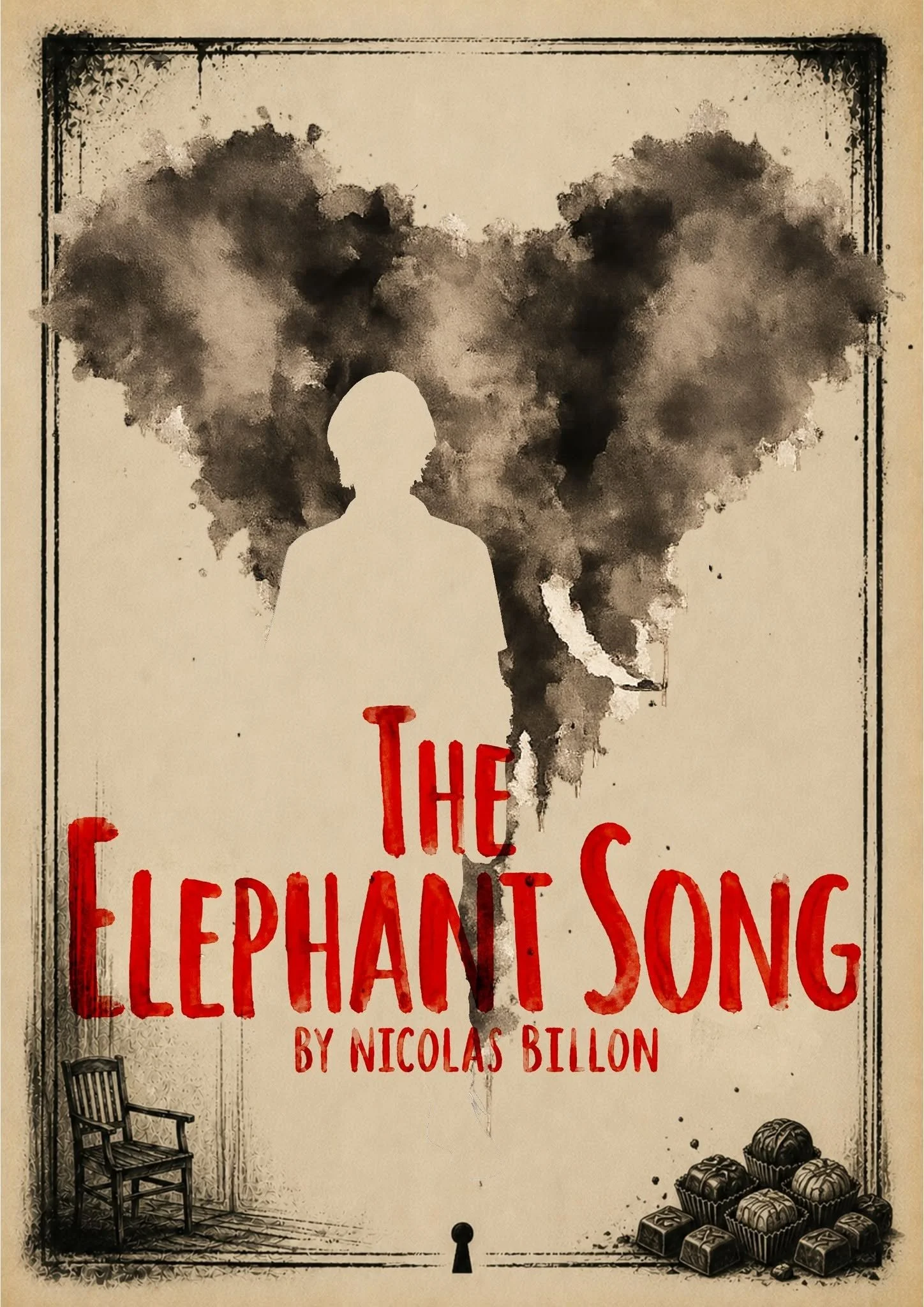
The Elephant Song
The Elephant Song by Nicolas Billon starts with a doctor’s disappearance leading the hospital director to question a charming yet manipulative patient. As their conversation unfolds, truth and deceit blur in a battle of intellect and control, revealing hidden motives and emotional trauma. The play explores power dynamics, guilt, and the dangers of underestimating those who play mind games, building toward a haunting and unexpected conclusion.
We invite you to watch this game of cat and mouse unfold and try to solve the riddles of The Elephant Song.
Details
-
There are plays that tell us exactly what happened.
The Elephant Song is not one of them.
From the moment I first encountered Nicolas Billon's remarkable script, I was captivated not by the mystery at its centre, but by the questions it refuses to answer. It is a work that constantly shifts beneath your feet. Every conversation feels like a chess match, every silence carries weight, and every revelation forces us to reconsider everything we thought we knew. It is a psychological thriller, certainly, but beneath that lies an intensely human examination of grief, memory, power and the stories we construct to protect ourselves.
The disappearance of a psychiatrist provides the catalyst for the play, but it is not the mystery that ultimately matters. Instead, Billon invites us into an interrogation where every participant is simultaneously investigator and suspect, victim and perpetrator. The search for truth becomes increasingly elusive as memories blur with manipulation, facts compete with perception, and certainty slips further from our grasp.
One of the most fascinating aspects of The Elephant Song is its exploration of communication. Throughout the play, characters speak constantly, yet genuine understanding remains frustratingly out of reach. Questions are answered with stories. Vulnerability is disguised through humour. Pain is buried beneath intellect, and truth emerges only in fleeting moments before disappearing once again. It reminds us that language is as capable of concealing as it is of revealing.
The image of the elephant itself becomes a powerful metaphor throughout the play. Elephants are celebrated for their extraordinary memories, their emotional intelligence and their capacity to mourn. Yet memory is never presented here as reliable. Instead, it becomes selective, distorted and deeply personal. Each character clings to their own version of events, reminding us that our memories are often shaped less by what happened than by what we needed to survive.
During rehearsals, we resisted the temptation to present easy answers. Rather than deciding who was right or wrong, innocent or guilty, we focused on understanding why each character believes so fiercely in their own truth. Every action in this play is driven by longing: the longing to be understood, to be forgiven, to be loved, to regain control, or simply to make sense of unbearable loss. It is within those desires that the humanity of these characters truly emerges.
This production has been built on the belief that theatre is most powerful when it trusts its audience. Rather than providing certainty, The Elephant Song asks us to sit with ambiguity. It challenges us to recognise how quickly we make assumptions, how easily we accept authority, and how often we mistake confidence for truth. Long after the final scene, the questions remain, inviting each audience member to assemble the pieces differently.
None of this would be possible without an extraordinary company of artists. Our cast have approached these complex characters with immense generosity, intelligence and courage, embracing both their contradictions and their vulnerabilities. Our creative team have crafted a world where every light, sound, pause and movement contributes to the psychological tension that defines Billon's writing. Their commitment has been nothing short of inspiring, and I am profoundly grateful for the passion they have brought to this production.
Thank you for joining us tonight and for supporting live theatre. Stories like The Elephant Song remind us that the greatest mysteries are rarely about discovering what happened—they are about discovering why people behave the way they do, and what those behaviours reveal about ourselves.
As the lights dim, I invite you not simply to watch this story unfold, but to become part of its investigation. Listen closely. Question everything. Trust cautiously.
And remember:
The most dangerous thing in this room may not be what is said... but what is left unsaid.
Finally, an extra special shout out to Bronwyn Naylor, we couldn’t have done this without you. You are a powerhouse of a director and human being and it has been a dream to work with you on this show.
-
Mental Health Themes
Adult Themes
Coase Language/Strong Language
Sexual References
-
Robin Egan as Michael
Greg Scurr as Dr. David Lawrence
LIbby Harrison as Miss Peterson
-
Wayne McPhee: Co-Director
Bronwyn Naylor: Co-Director
Brigitte Bennet: Set Design
-
Coming Soon!

Cast
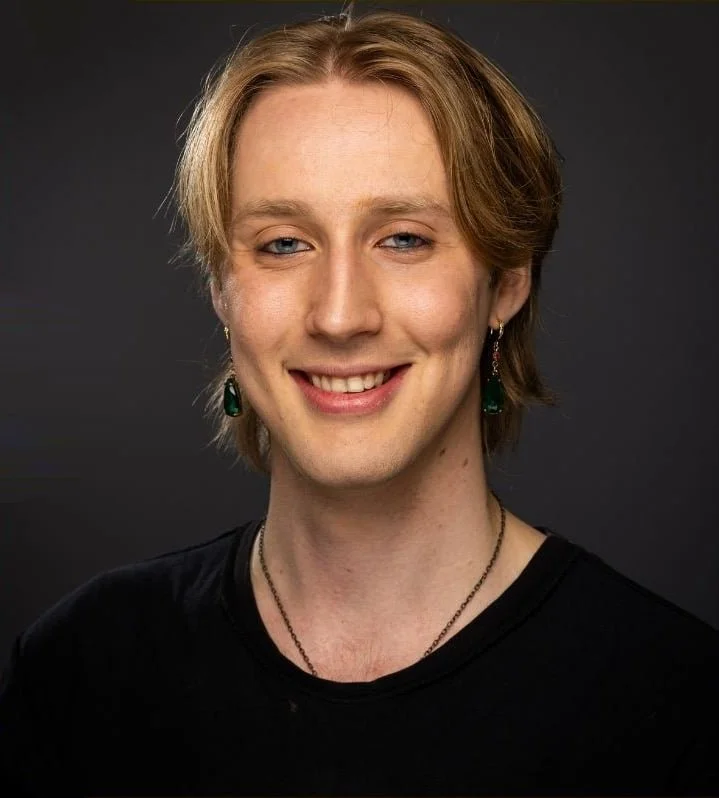
Robin Egan
as Michael
obin Egan is back on the theatre scene to the sound of bated breath from his countable fans.
A familiar face from many Brisbane Arts Theatre children's productions, Robin has appeared in roles ranging from Robin Hood and Mr Tumnus to Tigger. Venturing into the world of adult theatre has done little to halt his accumulation of noble titles, with his recent portrayal of Prince Humperdinck in The Princess Bride bringing his current tally to two princes and one lord. This resemblance, however, he finds uncanny.

Greg Scurr
as Dr James Greenberg
Theatre Credits: Converse Theatre: Oleanna; Ad Astra: Toy Symphony, The Amateurs; X Collective: White
Rabbit, Red Rabbit, Equus; The Curators: King Lear – Monster Show; Brisbane Arts Theatre: Cosi, Picnic
at Hanging Rock, The Crucible, One Flew Over the Cuckoo’s Nest, A New Way to Pay Old Debts,
Delicacy, Mixed Doubles; Pentameters Theatre: Mr Happiness (UK); Bridewell Theatre: Serious Money
(UK); Caravanserai: Tape (UK).
Film: Spa Weekend (2026), Eve (2009).
Short Film: Appetite of a Nobody, Henrietta, A Heart for Vendetta, Hollowed Stone, A Christmas Murder.
Training: Acting, The Method Studio (London); Creative Arts, Griffith University.

Libby Harrison
as Miss Peterson
Libby Harrison is a versatile performer across several fields including theatre, film, tv and web series. She has been fortunate enough to land hero roles in numerous tv commercials promoting everything from health insurance to lotto.
Theatre is her absolute passion though, as she loves the challenge of being in front of an audience with no safety net. She finds something exhilarating about showing an audience all aspects of a character and working with a dedicated team to bring an entire story to life. Past highlights have been playing Tiggy and Theresa in Bombshells, the Adult in Spring Awakening, and Penny in Caravan.
Libby has worked as a Role-Playing Actor in multiple environments since 2004 and spent over ten years at Griffith University where she ran their large Simulated Patient program across the Health Group. Libby finds this work extremely rewarding as it helps to create better health professionals and business leaders.